
Industry & Market · Tech
DJI vs. Insta360: When Patents Become a Battlefield
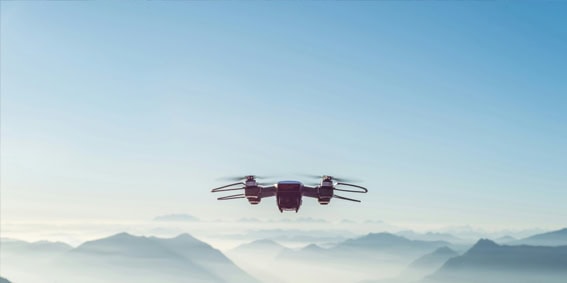
Photo of Alessio Soggetti su Unsplash
The lawsuit filed in Shenzhen smacks more of a strategic move than an intellectual property issue. And it comes at the worst—or best—time for the drone giant.
I admit it: the first time I read the news, I smiled. Not out of cynicism, but because of that sense of déjà vu that belongs to anyone who has followed this sector long enough. DJI takes Insta360 to court. "Patents infringed, former employees, disputed inventions. The classic script of the Chinese tech industry, performed on a stage I know well.".
The lawsuit was filed with the Shenzhen Court on March 23, 2026. In itself, an ordinary act. But the timing has all the makings of a calculated move: the launch is just days away. DJI Avata 360, the first spherical capture drone from the colossus, which is preparing to enter a segment so far dominated almost exclusively by Insta360 with the Antigravity project. The coincidence is too clear to be accidental.
The points of contention
- Contested technology Flight control, design, image processing
- Courthouse Shenzhen, China
- Filing date March 23, 2026
- Upcoming DJI Product: Avata 360 (Spherical Drone)
- Insta360 Product Involved: Antigravity A1
DJI's argument is based on a precise provision of Chinese law: if an employee leaves a company and files patents within a year, and those patents concern the same duties they performed internally, ownership remains with the original employer. We're talking about “service inventions”, a category that has real legal weight in China. The filed documents would reportedly include former DJI engineers, whose names in the international versions of the patents could be traced back to individuals who later worked at Insta360.
The answer of JK Liu, founder of Insta360, quickly took to his Weibo profile, and was far from defensive. Liu dismantled the accusations point by point: all disputed inventions were allegedly developed independently within Insta360. The most sensitive patent—the one that allows a one-button FPV-style “building dive”—is reportedly his own idea. And that system of obscuring the inventors' names in patents in the nationIs this standard practice during the PCT filing stage, used by Insta360 even for patents that do not involve any former DJI employees?.
What struck me the most, however, is the passage where Liu reveals that Insta360 has identified at least 28 of its own patents potentially infringed by DJI products—11 involving hardware, 8 involving software methods, 6 involving control methods, and 3 involving accessories—and chose not to take action. The reason? It prefers to innovate rather than litigate. Words of a certain strategic elegance, which ring true when one considers that in the fourth quarter of 2025, Insta360 recorded the fastest growth and highest revenue in recent years, in a market that grew by over 80%.
I am not a lawyer and I do not comment on chI may be right or wrong. But I am someone who has been watching this industry closely for years, and what I see is a larger company that, in the act of entering a smaller competitor's yard, chooses to bring lawyers with them. Insta360 has already spent over ten million dollars to win a similar lawsuit against GoPro. They know this game and seem determined to play it to the end.
Meanwhile, Liu announced seven or eight new products slated for release in 2026: gimbals, lavalier microphones, another drone. For Insta360, the legal dispute seems like background noise compared to their innovation roadmap. It's hard not to find that, in some way, admirable.
 Italian
  English
  German
  French