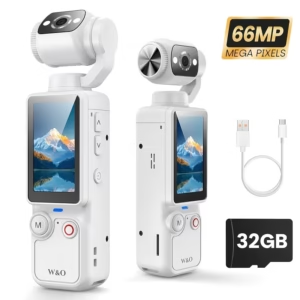
Video cameras

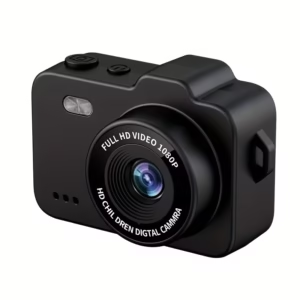
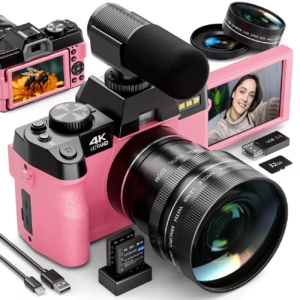
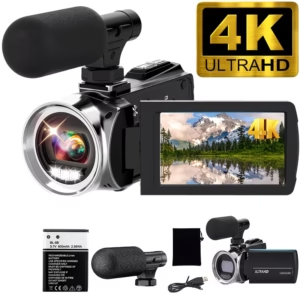
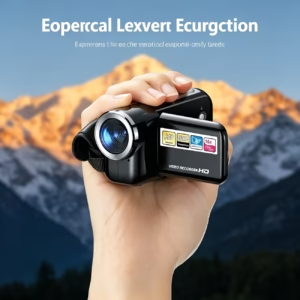
A video camera is an electronic device designed to capture moving images and record them in video format, often accompanied by audio. Video cameras can save footage to internal memory, memory cards, or external media and are used in professional, amateur, and cinematic fields.

Definition

A video camera is a recording device that combines an optical system (lens), an image sensor, and a digital recording system to capture video sequences in high quality.

Main features
Image sensor (CMOS or CCD), which converts light into digital signals.
Lens, fixed or interchangeable, to control framing and focus.
Video recording in various resolutions, such as Full HD, 4K, 6K, or 8K.
Image stabilization, optical or electronic, to reduce vibrations.
Audio recording, using built-in or external microphones.
Connectivity, such as Wi-Fi, Bluetooth, USB, or HDMI for file transfer and remote control.
Types of video cameras
Consumer camcorders, intended for home use and content creators.
Professional video cameras, used for television productions, documentaries, and reports.
Cinema cameras, designed for film productions with high image quality.
Action cameras, compact and durable, ideal for sports and outdoor activities.
PTZ video cameras, remotely controllable for events, conferences, and video surveillance.
Difference between camcorder and camera

The main difference is that a camcorder is primarily designed for continuous video recording, offering ergonomics, battery life, powered zoom, and advanced audio management. Modern mirrorless and DSLR cameras, on the other hand, while providing excellent video performance, were originally designed for photography and only later acquired increasingly advanced video features.

In summary, a video camera is the tool dedicated to producing quality video content, used in sectors ranging from journalism to television, from cinema to corporate communication and web content creation.

Shopping Cart
Scroll to Top