
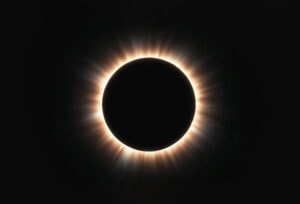
This evening, August 12, 2026, in the skies above Italy an exceptional astronomical event takes place: an’solar eclipse at sunset. While the eclipse will be total in parts of Northern Europe and Spain, in Italy we will witness a very deep partial eclipse, with the solar disk obscured by more than 90% in the Northwest and in Liguria.
To enjoy the show without risking your eyesight, here is the complete guide with schedules, practical directions, and essential safety rules.
1. Schedule and Where to Watch
The event takes place during the last hours of light, making it essential to have a an unobstructed western horizon (mountains, tall buildings, or tall trees) or being on a west-facing coast.
-
Start of the phenomenon: around 19:30 CEST (the Moon's first “bite” of the Sun).
-
Maximum peak: among the 8:10 p.m. and 8:25 p.m. CEST (depending on the region).
-
Northwest and the Alps: Light blockage greater than 90-95%.
-
Central Italy: darkening around 70-80%.
-
Southern Italy and the Islands: A solar eclipse between 60% and 78%, with the Sun setting before or during the peak.
-
-
End of the event: The eclipse will end around 8:30–8:40 p.m., with the Sun sinking below the horizon while it is still partially obscured.
2. Essential Eye Protection
Until the Sun's surface is 100% covered (a condition that will not occur in Italy tonight), looking at the Sun with the naked eye can cause irreversible retinal damage (solar retinopathy).
Appropriate instruments for direct observation
-
Certified eclipse glasses: must bear the marking ISO 12312-2 (or CE EN 1836). These goggles block 99.999% of visible light and harmful UV/IR rays.
-
Welding goggles: solely and exclusively with Protection rating of 14 or higher.
-
Solar filters for cameras and telescopes: filters in Mylar o AstroSolar to be applied to the part front of the objective.
Alternative methods (indirect observation)
If you do not have special glasses, you can resort to pinhole projection:
-
Take a sheet of cardstock and poke a small hole in the center with a pin.
-
Stand with your back to the Sun and let the sunlight pass through the hole, projecting the image of the obscured Sun onto a second white sheet of paper or onto the ground.
-
Even the shadow cast by the holes in a colander or by the tree canopy will reveal the outline of the solar crescent.
3. Contraindications and errors to strictly avoid
Home remedies They do not protect from retinal damage, as they let invisible infrared and ultraviolet radiation pass through, which is harmful to the eye.
What NEVER to use:
-
Regular sunglasses (not even by wearing multiple pairs on top of each other).
-
X-ray films, radiographs, or photographic negatives.
-
CDs, DVDs, tinted glass, or floppy disks.
-
Conventional photographic ND filters (unless specifically certified for solar use).
The danger of optical devices (Binoculars, Telescopes, DSLRs)
-
Never look at the Sun through binoculars, a telescope, or a camera viewfinder without certified solar filters placed in front of the lens.
-
Attention: Do not wear eclipse glasses while looking through an unfiltered binocular or telescope: the instrument's lenses concentrate sunlight like a magnifying glass, instantly burning through the glasses' filter and causing immediate blindness.
4. Practical tips for the evening
-
Choose the location in advance: find a free viewpoint facing west (west-facing beach, panoramic terrace, or hill).
-
Take regular breaks: even with ISO 12312-2 glasses, avoid staring at the Sun continuously for more than 2-3 minutes at a time. Rest your eyes for a few seconds.
-
Safe photography: If you want to photograph the event with your smartphone, use a protective solar filter placed over the camera to avoid damaging the device's optical sensor.
 Italian
  English
  German
  French