
The pioneer of the action camera is entrusting its fate to an investment bank. This is the confession, in corporate language, of someone who invented a genre and can no longer hold onto it. The story of a brand that has survived itself.
On May 11th, at 4:30 PM on the Californian coast, GoPro's board of directors approved a statement that in finance is called a «review of strategic alternatives» and that in a company's life is equivalent, more or less, to a trip to the notary. Translated from corporate-speak: the board will evaluate all options, including a sale or merger, to «maximize shareholder value.» Two days later, GoPro engaged Houlihan Lokey—an investment bank specializing, among other things, in selling struggling companies to the defense sector—to manage the process. The pioneer of the action camera, the company that invented an entire category of photographic equipment, is officially looking for a buyer.
This isn't the first time something like this has happened. In January 2018, GoPro had already set up something similar, relying on JPMorgan Chase: then, a month later, Nick Woodman had denied it. Eight years is a long time, and this time the numbers leave little room for denial.
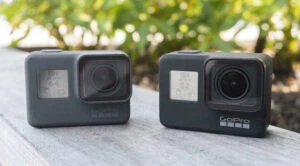
The first quarter as an autopsy
The data the board had before it when it signed the resolution speaks for itself. In the first quarter of 2026, GoPro reported revenue of $99.1 million, down 26.21% year-over-year. Approximately 313,000 cameras were sold, a decrease of 29.1% year-over-year. Subscribers to software services fell to 2.26 million. The GAAP gross margin plummeted from 32.11% to 4.31%—four point three percent, a figure more typical of the grocery industry than consumer electronics. Net equity, according to the latest 10-Q filed with the SEC, is negative by $1.9 million.
In April, the company had already notified the Commission of a restructuring plan: approximately 145 employees laid off, representing 23% of the global workforce, with an estimated cost of between eleven and fifteen million in severance pay. The same 10-Q contains the phrase that every auditor reads as a verdict: «substantial doubt about our ability to continue as a going concern.» In other words: substantial doubt about the company’s ability to continue as a going concern.
From Woodman Labs to NASDAQ, and back
To understand the weight of this news, it's worth going back to 2002. Nick Woodman was twenty-seven years old, with a recently failed company behind him (FunBug, a dot-com bubble games and prizes portal), and the idea of a plastic strap that would allow him to strap a camera to his wrist while surfing in Indonesia. The legend — which Woodman gladly tells — has it that he financed the first prototypes by selling beaded belts and shell necklaces from a Volkswagen van. In 2004, the first GoPro was released, still using 35mm film. Digital arrived in 2006. In 2009 came the HD Hero, and that was the breakthrough: the camera became an object for helmets, surfboards, bumpers, and military helmets.
For almost a decade, GoPro è the action camera. It sponsors athletes, funds its own YouTube channel, and fills its videos with skateboarding, paragliding, free climbing, and scuba diving. In 2014, it went public on Wall Street at $24 per share, rising to nearly $100. It was one of the most successful tech IPOs of that era. The brand is a language: «GoPro-style» became an aesthetic category before it was even a product.
For ten years, «GoPro» was a photographic genre before it was a company. Now it's a company trying not to become a memory.
Karma, and then the long descent
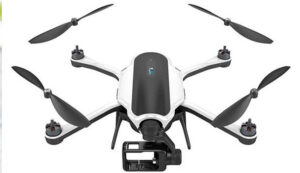
The strategic error, with hindsight, was in 2016. GoPro launched the Karma drone to chase DJI, after negotiations for a partnership with the Chinese company had collapsed over a branding issue (Woodman wanted the GoPro logo, Frank Wang did not). The Karma was slower than the Mavic, had less battery life, and lacked obstacle avoidance sensors. It was released during a crisis when shares plummeted due to a power defect. It was recalled, relaunched, and never truly took off. In 2018, the project was shut down. In the meantime, DJI had conquered the consumer drone market and, worse, began to place its own action cameras on the market. Then came Insta360 with its 360° cameras, and Akaso with low-cost options. The monopoly was over.
Since its 2014 peak, GoPro shares have lost over ninety-eight percent of their value. The market capitalization today is approximately $216 million. For a quick comparison: less than the value of a Park Avenue penthouse.
SHEET · GPRO Q1 2026
Quarterly Announcement Numbers
The strange deviation: defense and aerospace
A month before the sales announcement, on April 13, GoPro made another announcement that, in retrospect, is the real clue. The company had hired Oliver Wyman — one of the biggest consulting firms in the defense and aerospace sector — to study its entry into military markets. The official reason: GoPro cameras are already used «in numerous applications,» including being mounted on the solar panel wings of the Orion spacecraft in the Artemis II mission. They talk about «markets worth billions of dollars.» They talk about «dual opportunities, civilian and military.».
It's a pivot that tastes of desperation disguised as vision. A company born to film Hawaiian surfers« dives is now trying to sell cameras to attack drones. It's no coincidence that Houlihan Lokey is a bank with »strong ties to the defense sector." The prospective buyer, therefore, might not be another camera manufacturer. It could be a military contractor interested in the brand, the intellectual property on video stabilization, and the robustness standards tested over the years by snowboarders.
A GoPro mounted on a Patriot missile is not a dystopian scenario: it's a business plan filed with the SEC.
What does it mean for photographers
GoPro's parabola is, in its own way, a story of popular photography. When the two-hundred-dollar HD Hero started circulating on helmets and under boards in 2009, it broadened the photographic gaze to pointperspectives that were previously reserved for filmmakers with big budgets. The drone was still a military dream; the steadicam was Hollywood stuff. The GoPro democratized the first-person view, the dog's eye view, the behind-the-scenes of a moving body. A good portion of the aesthetic through which we watch sports on TV today—the shot attached to the Formula 1 driver's helmet, the downhill subjective view, the zoom from the bike handlebars—is a child of that yellow-and-black cube.
Then aesthetics became trivialized, moving to phones, and DJI understood something that GoPro missed: the action camera, by itself, is no longer enough. It needs an integrated gimbal, it needs the natural voice of creators, it needs an ecosystem that communicates with drones, with editing AI, with social media. Insta360 added 360° and automatic shot reframing in post-production. GoPro remained where it was in 2015: a robust square to stick onto things.
The recently announced Mission Series—which Woodman, in the press release, calls «our boldest step yet into professional photography»—is an honest attempt to respond. But it arrives with an empty treasury, a four percent margin, and an advisor tasked with finding a buyer for everything before the banks pull the plug.
The last shot
There is a subtle cruelty interwoven into these GoPro weeks that is worth noting. On the very same day that Houlihan Lokey accepted the mandate for sale—May 13th—Sony presented the 66.8-megapixel A7R VI with a stacked sensor, and Canon unveiled its first full-frame camera without a viewfinder. The world of photography continues. It announces, experiments, sells. GoPro, which had essentially invented the discourse on action photography, is sitting on the other side of the desk, facing a consultant in a dark jacket explaining how to calculate the brand's residual value.
It's not over yet — the council clarifies that «there is no guarantee that the process will conclude with a settlement,» which is the polite way of saying We might not find anyone willing to buy us.. But it's the confession that the pioneer has stopped believing he can do it alone. The machine is still on, still recording; but now it's framing its own funeral, in stabilized 4K, with a 170° wide-angle lens.
The interesting question, from a photographer's perspective, isn't who takes it. It's whether, in ten years, we'll still use the word «GoPro» as a generic noun to indicate a certain way of seeing. For now, yes. But it's the moment when generic nouns slowly start to become proper nouns again, and proper nouns start to disappear.
 Italian
  English
  German
  French