
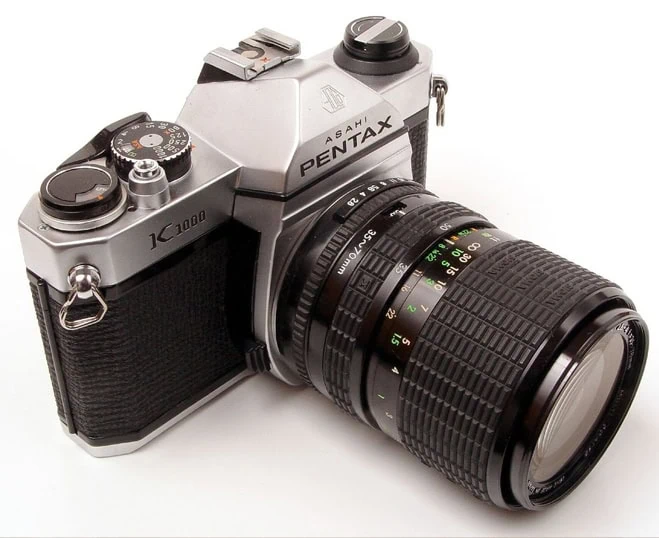
In 2026, you continue to produce DSLRs while the rest of the industry has declared the DSLR dead. And the numbers — surprise — are starting to tell you that maybe you were right.
Every now and then, I like to imagine that monk-companies exist. Companies that have chosen a single rule and follow it even when the world around them converts to something else. Pentax is one of these. While Canon, Nikon, and Sony have abandoned the mirror — some officially, some silently, some by starving it out of their catalogs — Pentax has spent the last six years repeating the same prayer: The DSLR is not dead, wait and see. It looked like a testament. In 2026 it's starting to look like a P
Rofeziya.
The latest rumor, which comes from Asahiman—the most credible rumor source
The word on the Pentax universe is clear: a new digital SLR will be announced by year-end. Not “maybe.” Not “rumored.” It's coming. It's almost certainly a K-3 Mark IV, or a variation on the same framework that Ricoh-Pentax has mastered for years. The model doesn't matter, for a second. What matters is the thing that no one, outside the bubble, expected: Pentax hasn't given up. And the news, in 2026, is precisely this.
The impossible bet
Let's go back to 2019. A Ricoh executive, in an interview that seemed embarrassingly delicate at the time, said that many users who switched to mirrorless would return to DSLRs after a year or two. He added that the DSLR market, while declining, would rebound. It was an optimistic, generous, and somehow tender prediction. And it turned out to be wrong.
, at least on the first part: photographers haven't gone back en masse. Mirrorless has won the race, Canon and Nikon have frozen their DSLR lines, Sony has abandoned the A-mount, and the numbers leave no room for romance.
The Demise of the DSLR — The Numbers
- Global DSLR Shipments — Record High
- over 15 million
- Global DSLR Shipments — 2023 (CIPA Data)
- 1.17 million
- Year-over-year drop in 2023
- −37%
- Major manufacturers developing new DSLRs
- 1 (Pentax)
- Pentax's DSLR quota — BCN Awards 2026
- 17.71 TP3T (up from 9.71 TP3T)
- Last Pentax full frame DSLR
- K-1 Mark II (2018)
- Latest APS-C flagship
- K-3 Mark III (2021)
- Pentax 17: Pentax's first film camera
- ~19 years old
Yet Pentax is still here. Not as a secondary line kept alive for nostalgic hobbyists. Not as an accounting afterthought. All the way in. The only major manufacturer left betting, entirely,
on a technology that the rest of the industry considers archaeology. Fstoppers described it with a formula that I can't get out of my head: the last believer standing. And it's accurate. Because here we are not facing a market strategy, not really. We are facing a belief.
We are not talking about a market strategy.
We're talking about faith — and the few times where faith, against all odds, is rewarded by numbers.
And then, something changed
Here comes the part no one had written into the script. BCN data from 2026 — the most watched sales ranking in Japan — says Pentax's share of DSLR sales has risen to 17,7%, nearly double the 9.71% market share from the previous year. It’s not exactly earth-shattering, of course. The overall DSLR market is small, and growing your share of a shrinking pie is easier than it seems. But there’s a message in that number, and the message is: people buying a DSLR today are increasingly choosing Pentax. Because it’s the only brand that still offers them one.
And that’s not the only surprising statistic. Compact cameras (not DSLRs, but bear with me for a second) saw a 30%% increase in units sold in 2025, after fifteen years of decline. The Pentax 17—the small half-frame film camera that Ricoh pulled out of its hat in 2024, the first Pentax film camera in nearly twenty years—has sold out repeatedly, with waiting lists and an instant cult following. Something is happening in the minds of photographers that quarterly charts can’t quite put their finger on yet. Something that bears a striking resemblance to vinyl: we aren’t going backward; we’re rediscovering what we truly want to hold in our hands.
Why do I care (why should you care)
I'm not going to tell you that the DSLR is back. I'm not going to tell you to sell your mirrorless camera and buy a K-3. I probably won't. My backpack stays as it is. And I'm not going to give you the nostalgic speech either, the one about “ah, the clunk of the mirror, the battery that lasts a week, the autofocus that doesn't spy on your face with AI.” If we want to play the specs game, mirrorless wins today and will win tomorrow. End of technical talk.
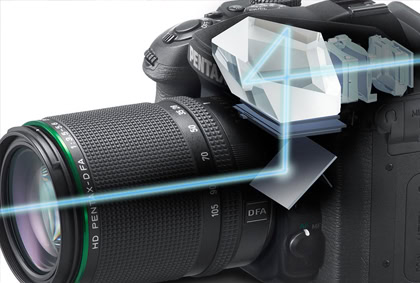
But there's another discourse, and that one feels mine. The discourse is about monoculture. When I open the catalog of any brand and find thirty essentially identical camera bodies — stacked sensors, AI autofocus, 40 frames per second burst, 8K video that none of us ever edit — I start to smell that smell. The smell of the supermarket where all the frozen pizzas have the exact same mozzarella. And then, as a photographer and as someone who writes about photography, I need there to be at least one company that asks me: Do you really want to see the scene with your own eyes before taking her picture? Because that's what a reflex mirror does, in essence. It gives you back the world before the sensor interprets it. It forces you into a slower, more mechanical, more — forgive the word — true.
It's not a matter of image quality. It's a matter of relationship with the image. And that relationship, in 2026, is worth something precisely because it has become rare.
The prophecy, halfway through
The 2019 Ricoh executive was wrong on the main prediction—no, crowds did not return to DSLRs. But he was right on the underlying trajectory: there is a minority of photographers who, after going through the modernity of mirrorless, rediscover the gesture of the SLR. Not as nostalgia, not as a rejection of technology, but as a conscious choice of a type of experience. And Pentax, stubbornly, kept the door open for them. For six years. Without giving up. Without pivoting. Without conciliatory press releases.
Now, in 2026, a new DSLR arrives. It won't save the industry. It won't reverse a trend. But it will send a message, and the message is simple: The less crowded roads still exist. All that's needed is for someone, sooner or later, to decide to travel them.
For now, I'll just watch. With a raised eyebrow, as usual. And with a small, honest respect for those who bet against everyone and—at least for now—haven't hurt themselves yet.
 Italian
  English
  German
  French